
by Howard T. Anderson

On October 7, 2023, the military arm of Hamas—an extremist Islamist organization that has ruled Gaza since 2007—conducted a raid into Israel during which it killed or kidnapped some 1,400 Israelis, most of them civilians. Israel responded with a sustained aerial bombardment followed by a land invasion with the avowed objective of crushing Hamas’s military capabilities and ending its political control of Gaza.
This conflict, like the one between Ukraine and Russia, offers an instructive example of how corruption can exert malign influences affecting war and national security.
Background
The Israel-Hamas war is the latest in a very long series of conflicts between Arabs and Jews in the region between the Mediterranean Sea and Jordan River historically known as Palestine, which encompasses the nation of Israel plus lands wholly or partially controlled by the Palestine Authority (PA) and Hamas.
The complex history underlying these conflicts includes recurrent wars and other dramatic events that tend to obscure how corruption (1) influenced the events and conditions leading up to the current fighting; and (2) could thwart efforts to recover from it.
For a good overview of the conflicts and attempts to resolve them, see two books by Dennis Ross, an American expert on the region who has served Republican and Democratic administrations in negotiations among key players in the Arab Israeli conflict: The Missing Peace (2004); and Doomed to Succeed: The U.S.-Israel Relationship from Truman to Obama (2015).
As is typical of violent conflicts, Palestinian and Israeli civilians caught up in the machinations of their leaders have endured a disproportionate share of the suffering. These civilians are more diverse than the labels frequently attached to them might suggest. Israeli citizens include persons of various ethnicities, backgrounds, and religious affiliations—Arabs, Christians, and Muslims, for example—and even among the Jews there are sharp divisions reflecting religious, political, and philosophical differences. Palestinian civilians are also a diverse group. They include Christians of different ethnicities and denominations, Muslims of the Sunni and Shia branches of Islam, and persons who, whatever their religious affiliation, have a secular view of politics. Given such diversity in the affected populations, it is especially tragic that governing bodies in both Israel and Palestine came to be dominated by religious fanatics with incompatible visions for the future.
These contrasting visions have been much in evidence since December 2022, when Benjamin Netanyahu—a longtime conservative political figure in Israeli and the country’s off-and-on prime minister since the 1990s—formed a governing coalition with right-wing extremists sharing a religiously-inspired vision that the Jewish nation should encompass all of Palestine. (In an ironic twist, Netanyahu turned to his most extreme coalition partners after centrist partners boycotted the coalition over the pending corruption charges against him. See Shira Rubin, “The secretive Israeli think tank behind Netanyahu’s judicial overhaul,” Washington Post, March 25, 2023, A8.) On the Palestinian side, Hamas had for many years made clear its goal to establish a Muslim state controlling the same territory. Thus, with the Netanyahu coalition’s ascent to power, both Israelis and Palestinians had radical political leaders who believed that God wanted them to rule the entire land.
For simplicity, the following discussion will focus on corruption’s effect on the main contending parties: Israel, Hamas, and the PA.
Israel
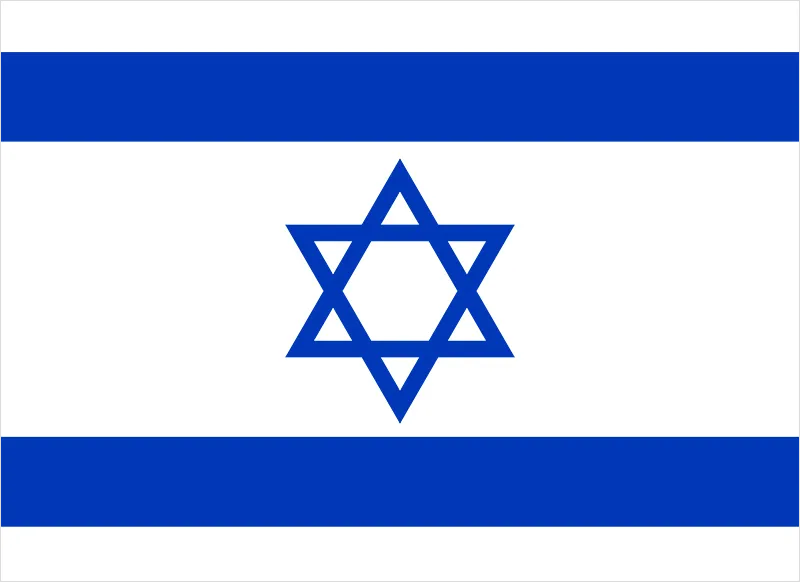
As a democracy with established institutions and traditions based on the rule of law, Israel theoretically is in a good position to deal with corruption within its own borders. Transparency International’s annual Corruption Perception Index (CPI) for 2022 awarded Israel a score of 63 out of 100 (with 0 being the most and 100 the least corrupt), ranking it 31 of 180 nations covered by the CPI. This compares favorably with the average score of 43 and puts Israel far ahead of most Arab neighbors. A 2019 indictment of Netanyahu on corruption charges would appear to demonstrate Israel’s commitment to enforcing its anticorruption laws even against persons of power and influence.
Netanyahu, however, remained influential despite the charges against him. His trial, which began in 2020, was delayed by Covid and other reasons and was unfinished in December 2022 when, as noted, he formed a ruling coalition by aligning himself with right-wing extremists. (The trial resumed in December 2023.) With extremist support, Netanyahu began a campaign to curb the power of Israel’s judiciary. Opposition to this maneuver was intense: hundreds of thousands of Israelis took to the streets to oppose it, a great many of them members of the military, raising the concern that the controversy would interfere with Israel’s national security. In addition to the more general concern that Netanyahu’s proposal would remove a key check on the power of an increasingly radical government, there was the specific perception among many Israelis and foreign observers that Netanyahu was attempting to shield himself from the still-pending corruption charges. (See, e.g., Norman Eisen, Mandi Patel, and Kai Smith, “The corruption and autocracy nexus: The case of ‘King Bibi,’” Brookings Institute, Order from Chaos series, April 10, 2023; Tia Goldenberg, “What is the latest on Netanyahu’s corruption trial?” Los Angeles Times, April 27, 2023.)
Palestinian Authority

The PA evolved from the 1993 Oslo Accords in which Israel agreed with the Palestine Liberation Organization (PLO), the most prominent Palestinian political organization at the time, to create a self-governing authority for Palestinians living in Gaza and portions of the West Bank. From its earliest days, however, the PA has been weakened by the widespread perception—among Palestinians themselves as well as outsiders—that it is hopelessly corrupt. (See, e.g., Tariq Dana, “Corruption in Palestine: A Self-Enforcing System,” al Shabaka, Aug. 18, 2015) This perception, which has much evidence to support it, has undermined the PA’s ability to deliver effective leadership to people badly in need of it. The taint of corruption also undermined the PA in its rivalry with Hamas for leadership of the Palestinians.
After Israel withdrew its troops and settlers from Gaza in 2005, the PA became the temporary governing authority there pending elections in 2006, which it lost to Hamas. In 2007 Hamas ousted the PA to become Gaza’s autocratic governing body. Gaza has not had an election since then. The PA, in the meantime, has shared governance of Palestinian areas in the West Bank according to a shaky arrangement with Israel, but Hamas also has influence in those areas. Like Hamas in Gaza, the PA has not held recent elections in the areas it governs.
The dynamic that can be seen in Hamas’s encroachment on what was once PA’s dominant position as leader of the Palestinians is a familiar one with many ancient and recent antecedents: (1) a political movement or governing regime becomes—or is seen to be—corrupt and decadent; (2) an insurgent movement viewed as more “pure” in its incorruptibility and uncompromising pursuit of popular goals forces the old regime out of power; and (3) the new, militant regime dismantles legal, institutional, and political restraints on its own power and rules by force. Corruption is not the only factor that contributes to this dynamic, but it can play a major role by discrediting governments and political movements, rendering them less effective in coping with issues of concern to their societies.
In the PA’s case, an additional factor contributes to the downward spiral: its perceived corruption has given Israeli governments a convenient excuse for lack of progress in finding a just and stable solution to its longstanding conflict with Palestinians. How can Israel be expected to negotiate such a solution, the argument goes, without a viable partner on the other side that is both accepted by Palestinians as their legitimate leader and prepared to recognize Israel’s right to exist?
Hamas
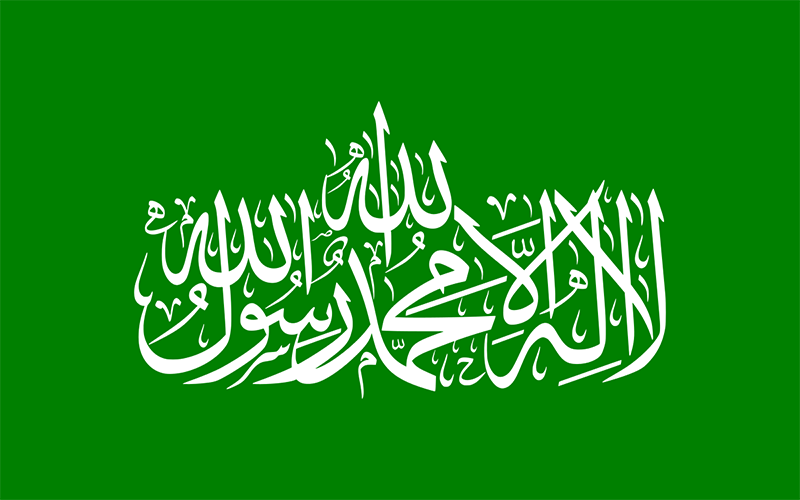
While the PA’s corruption and overall ineffectiveness impose severe limitations on its ability to lead Palestinians in productive negotiations with Israel, Hamas is even more unsuitable for that role because of its avowed goal to destroy Israel and establish an Islamist government in its place. (See Ed Husain, “The Theology of Hamas,” Wall Street Journal, Nov. 10, 2023, A15) Any doubts about the seriousness of Hamas’s strategic goal–and the murderous tactics likely to be used in pursuing it—were put to rest in October 2023 along with any chance that Israel and Hamas could be partners in finding a stable peace. (See Nov. 7, 2023 Jake Tapper report on CNN quoting Hamas spokesmen, including vow to repeat October 7 attack and stating, with respect to the deaths of Gazan civilians, “we are proud to sacrifice martyrs.”)
The PA’s corruption-plagued administration of the West Bank (and briefly in Gaza) no doubt helped Hamas gain influence among Palestinians, but substituting Hamas for the PA as the governing authority in Gaza did not end corruption in that quarter. If anything, corruption became more pervasive as resources intended for Gaza’s civilians were diverted to construct a massive network of tunnels designed to contain missiles and other weaponry, military command posts, and the facilities needed for an army to be unleashed against Israel. (See, e.g., “Corruption in Palestine,” cited above, regarding “massive profits” made by Hamas with lack of transparency in construction of tunnels.) This form of corruption hurt Gaza’s civilians in two ways: first, by diverting resources that could have improved their standard of living; second, by provoking a response from Israel, which attempted to choke off the supply of armaments to Hamas by restricting movements of people and goods into and out of Gaza.
Gaza’s switch from one kind of corruption to another illustrates another longstanding historical pattern: autocratic regimes based on extremist religious, political, or ideological movements may derive popular support from the perception that at least they are more honest and freer from corruption, but once in power they are fully capable of corruption on at least as grand a scale as their predecessors. Systemic corruption need not result from greed for wealth and luxuries; the quest for political and military power can also furnish the corrupt motive. And, in the formulation commonly associated with the nineteenth century British politician Lord Acton, “power tends to corrupt and absolute power corrupts absolutely.”
Summary
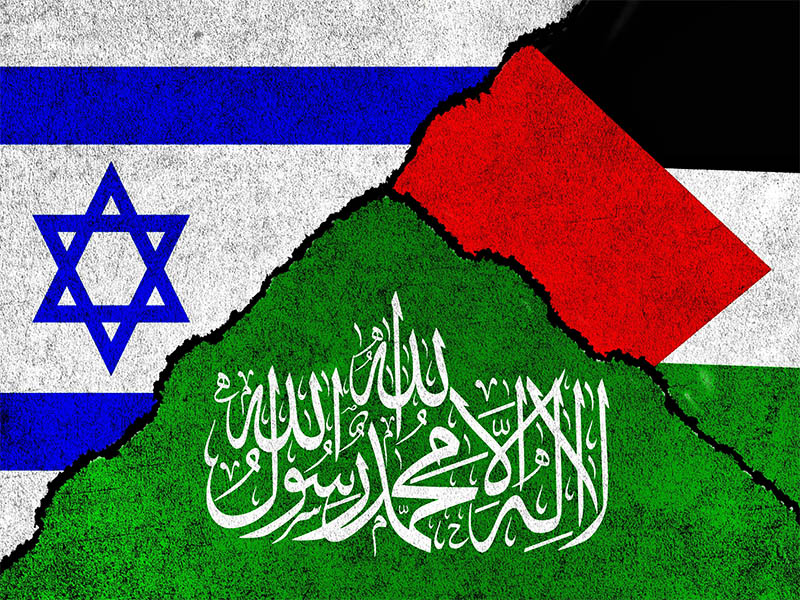
The history of conflict preceding the war between Israel and Hamas has many complexities that make it impossible to quantify the part played by any single factor, such as corruption among the political leaders of the major contestants. It is a safe bet, however, that the reality and perception of corruption contributed to the multiple failures of leadership that produced the current human and economic catastrophe.
Whatever corruption’s role was in the genesis of the war, recovering from it will require, among other things, billions of dollars in aid from outside Israel and Palestine, possibly along the lines of the American Marshall Plan that helped Europe recover from World War II. Raising money on such a scale will be greatly impeded, if not made impossible, by a credible threat that resources intended for humanitarian and reconstruction purposes will be drained away by corruption.
Finding a stable political solution will also require both sides to jettison extremists from their political leadership and recommit to democratic principles and the institutions needed to carry them out. A Palestinian journalist recognized the importance of democracy in a recent opinion piece: “The strategic aim should be the creation of an independent and democratic Palestinian state.” (Daoud Kuttab, “To end the war in Gaza, recognize Palestine,” Washington Post, Nov. 28, 2023, emphasis added). As IACRC has emphasized, there is a strong relationship between healthy democratic institutions and effective anticorruption measures, a view reflected in the above-cited Brookings Institution study, which found in the Netanyahu coalition’s attempt to weaken Israel’s judiciary “a vivid example of the connection between corruption and democratic backsliding.”
Ensuring that resources intended to rebuild the damage caused by war are not diverted and building humane democracies capable of negotiating a stable peace will require strong political leaders on both sides who are willing and able to mobilize the better angels of human nature. Such leaders are unlikely to come either from the ranks of those steeped in corruption or from religious extremists intent upon ruling the entire region between the river and the sea.