
Recent mass protests around the world illustrate once again the close relationship between corruption and the absence of healthy democratic institutions. During the past few months people, including large numbers of young people, have taken to the streets to protest corruption, violations of democratic norms, or both.
In September and October 2025, for example, Transparency International (TI), an international organization which publishes an annually updated index ranking the countries of the world according to perceptions of how corrupt they are, described youth-led anticorruption movements in widely dispersed countries, such as Georgia, Nepal, and Kenya. See TI, “The Week in Corruption,” 9/26/25 and 10/10/25. Describing the movements as “youth-led,” TI identified commonalities among the complaints of the protesters, such as:
- Entrenched corruption and lack of accountability
- Suppressing dissent and weakening democratic institutions
- Politically motivated investigations and prosecutions
- Impunity for corrupt actors
Other mass protests occurred in the Philippines, Indonesia, Tanzania, Morocco, India, and Mexico, and the United States. The Philippine protests (September 2025) were focused on alleged corruption in a flood control project; there were more protests in the Philippines at the end of November.
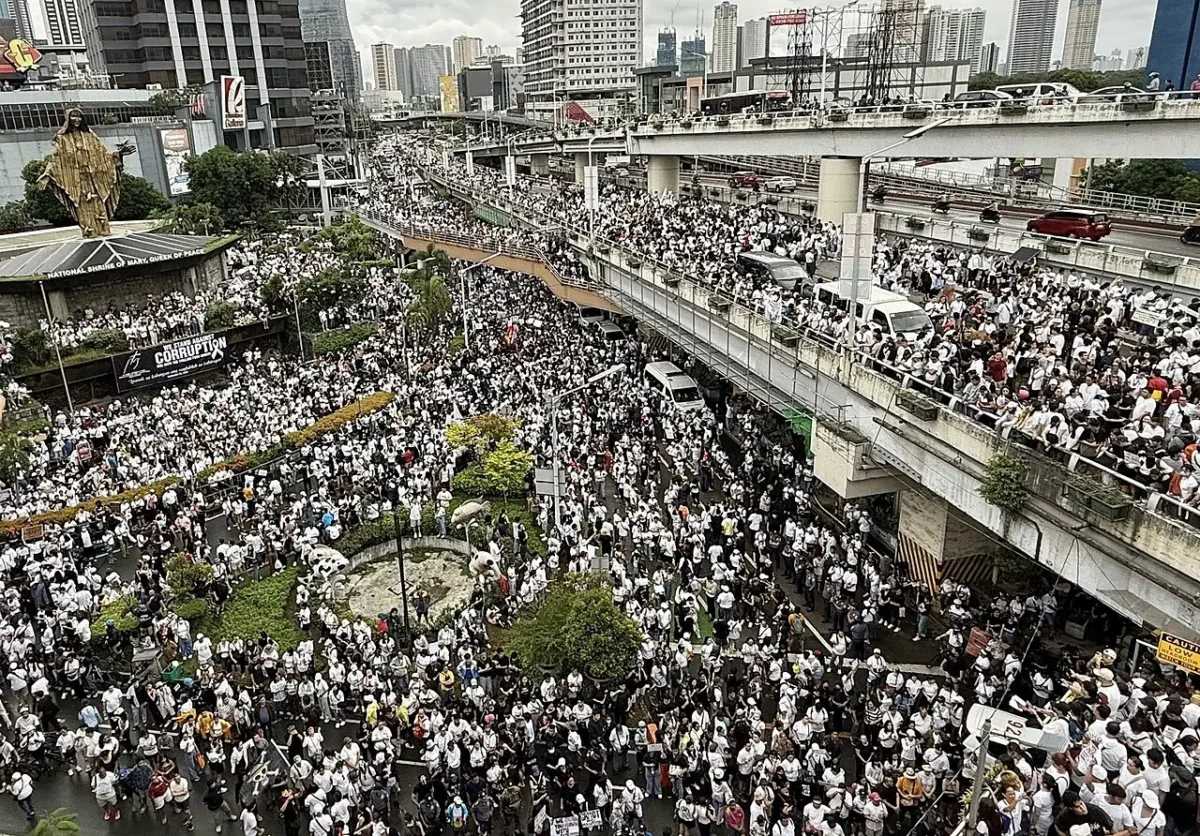
https://commons.wikimedia.org/wiki/File:Trillion_Peso_March_-_EDSA.jpg
In Indonesia people took to the streets in August 2025 to protest government corruption, economic inequality, and police brutality. Youth-led anticorruption protests in Morocco (September-October 2025) contrasted questionable spending on sports stadiums with the deterioration of health care. Tanzanian protests (October 2025), in which there were deaths, resulted from perceptions that the incumbent president had persecuted opposition leaders and rigged an election to stay in power. Alleged election-rigging was also at the center of protests in the Indian state of Bihar (September 2025), while in Mexico (November 2025) there were protests directed against crime, corruption, impunity, and democratic backsliding. Finally, the October 2025 “No Kings” demonstrations drew many thousands of Americans into the streets to protest the perceived undermining of democratic norms and institutions; they occurred in the context of widespread perceptions that government corruption has increased in the United States.
Like anticorruption movements in Russia and Ukraine (the subject of previous commentary in this space) others around the world have begun as loosely organized expressions of popular disgust with regimes increasingly perceived as hopelessly corrupt and became—or may yet become–more lasting opposition political forces. There is a logical progression from demanding action against corruption to reforming political systems that are unresponsive to such demands. Indeed, widespread corruption is a symptom of an unhealthy political system, one that has weakened the role of law and other democratic norms and institutions forcing its people into the streets to make their voices heard.